Relationships Advent Calendar . Day 1 . Forgive for 5 minutes

Happy December .. and welcome to the first day of this challenge that we’ll be carrying out together in the days leading up to Christmas!!

Today is about preparing the ground for the month ahead.

Holding on to hurt from the past can prevent us from enjoying our present .. so today take some time to think about someone who hurt you in the past, breathe deeply and send them forgiveness for 5 straight minutes.

Forgiveness is a funny thing, ideally it takes remorse and taking responsibility from the person who hurt us as well as the willingness to let go on our side.

Sometimes though the other person either won’t, or maybe can’t ask for forgiveness if they’re no longer in our lives .. this exercise isn’t for them, it’s for us to be able to let go of that hurt just a little bit more ..

advent

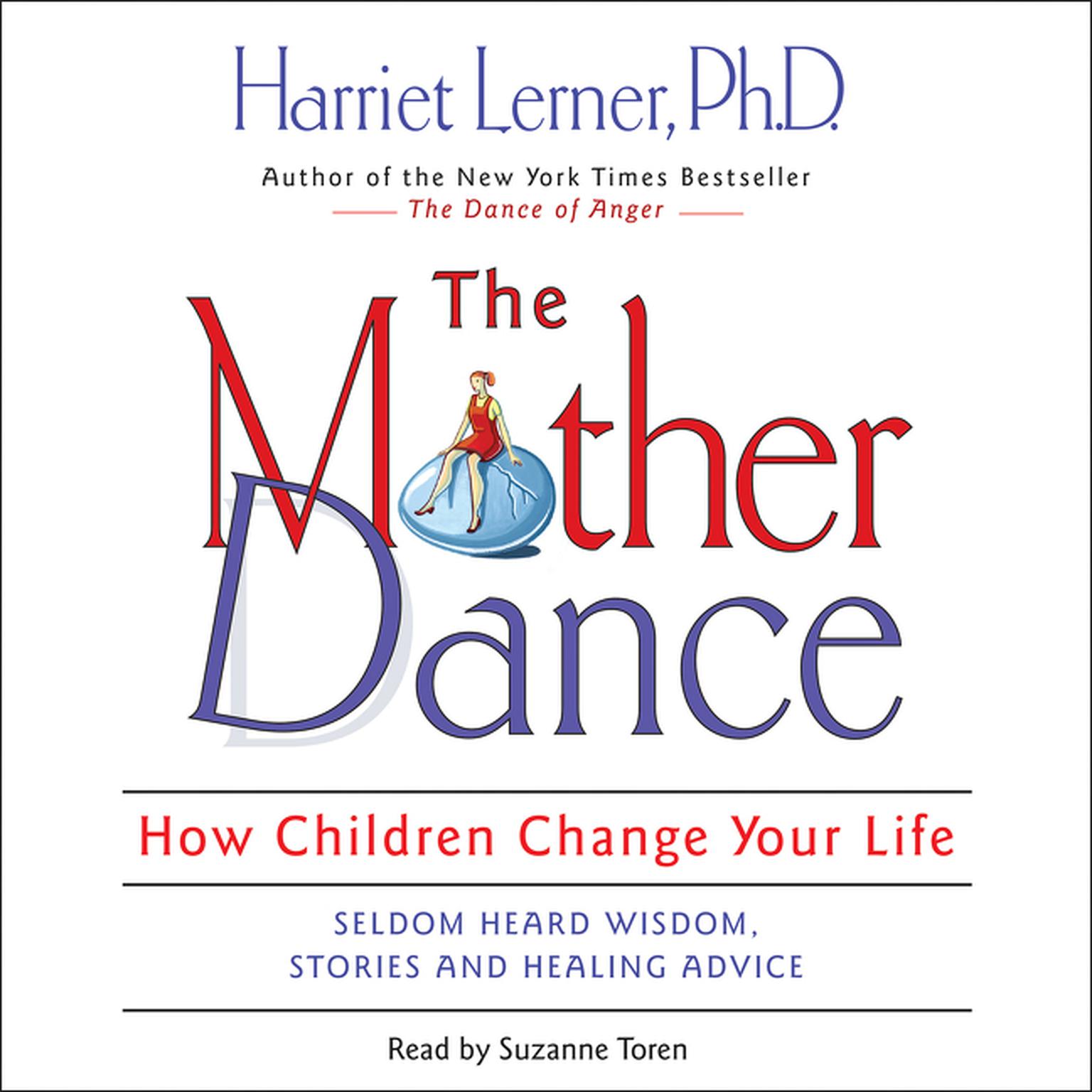
The Mother Dance

It’s nearly Mother’s Day here in the UK, and I’ve been thinking about Harriet Lerner’s wonderful book ‘The Mother Dance’ that I received years ago from a wonderful colleague, and dip into often. Part of my preparation for this Mother’s Day is going to be putting my feet up with a cup of tea and delving back into this wonderful source of wisdom.

‘From the celebrated author of The Dance of Anger comes an extraordinary book about mothering and how it transforms us — and all our relationships — inside and out. Written from her dual perspective as a psychologist and a mother, Lerner brings us deeply personal tales that run the gamut from the hilarious to the heart-wrenching. From birth or adoption to the empty nest, The Mother Dance teaches the basic lessons of motherhood: that we are not in control of what happens to our children, that most of what we worry about doesn’t happen, and that our children will love us with all our imperfections if we can do the same for them. Here is a gloriously witty and moving book about what it means to dance the mother dance.’

I’m a daughter, a granddaughter and a mother, and recently I’ve been mulling over what this means to me in the here and now, the Russian dolls fitting into each other. My maternal family come from northern France, with the history of upheaval and trauma that entails, through war and struggle. There are family stories of my grandmother having to abandon her beloved red bedcover as the family tried to escape the Occupied Zone because it was attracting attention from fighter planes above.

I’m going to be thinking about the things that happened in my family that continue to affect how I show up in the world and I invite you at this time that is focussed on mothers and mothering to do the same. You might ask yourself:

What are my beliefs about mothers?

Is this different to the mother I was given?

How do I mother the people in my life? (We can all do this, including those who don’t identify as female or feminine)

How could I mother them in a way that better aligns with my values?

What kind of mothering do I need right now?

How can I include more of that in my life?

The Woes of Sibling Roles

I’m a media ambassador for the British Association for Counselling and Psychotherapy and I was lucky enough to be asked last year to contribute to an article for Psychologies magazine that was published in the January 2019 edition.

It was a great experience, I chatted with the writer for about an hour about research, theory and my thoughts on how sibling relationships are developed and maintained. We talked about how birth order can play a part in this, as well as family patterns and personalities.

She told me a bit about something she wanted to shift in her relationship with her siblings and I suggested some ideas of things to think about that she went away and tried. A week later she told me she’d been surprised at the shift that had happened and that she was planning to keep going with the changes she was making.

You can read the article here, I hope you enjoy it!

Email Counselling

I’ve just completed a fascinating course in using digital technologies in counselling and therapy.

Some of it was a refresher as I’ve been offering telephone and webcam appointments for some time, but it’s always nice to take a full day to work with new and existing colleagues on our clinical practice. There were counsellors in our group from as far south as Devon. Luckily I didn’t have to travel as far.

I’m excited about reaching people who can’t schedule appointments at specific times by offering email counselling. I’ve been thinking about this for a while and now I have some practice under my belt this way of working is available to all my clients.

People who can really benefit from this way of accessing support are those like new parents, carers, people who work away, or maybe those who just don’t feel comfortable speaking with someone for any reason.

There’s a charge for each email you write, and I spend an hour reading and responding to your email. I guarantee that you will receive a reply within 3 working days.

Get in touch if you would like more information.

← Back

Thank you for your response. ✨

Warning
Warning
Warning

Warning!

5 Principles to a Stronger Relationship

Thanks to David at Select Psychology in Tynemouth who asked me to write a short piece for their website for Valentine’s Day. I thought it was the least I could do in recognition of all the fresly brewed coffee and teapigs green tea he lets me drink there!

I’ve seen many couples for relationship therapy over the years: some have managed to part with a better understanding of why they found it so difficult to sustain a loving relationship, while many leave grateful for the opportunity to deepen their relationship and move to the next level of togetherness as a result of facing difficulties.

I’m a Relate trained therapist, and also a big fan of the Gottman Institute’s work in researching thousands of real couples since the 1970s (https://www.gottman.com/about/research/) as I believe it’s important to base therapy on a sound evidence base. I’m a bit of a relationship geek and actually enjoy reading research papers!

Four of the principles from the Gottmans’ work that I find myself using all the time are included in their book ‘The Seven Principles For Making Marriage Work’ and their ‘Sound Relationship House’, both of which can be easily found online.

69% of conflicts go unresolved: not every disagreement has to be worked through and many successful couples never address 69% of these. Make it a rule to consciously choose which conflicts are worth working on together and which are not important.

5:1 ratio: often when couples come to see me they’ve become frustrated because in trying to improve the relationship they’ve got to a point where every interaction is negative. This is an easy trap to fall into because humans naturally focus on problem solving, but research shos that every negative or problem solving statement needs to be balanced by at least five positive ones. I think of it like vaccinating your relationship in advance of the bugs of life!

Love Maps: often when we date we stay up all night talking and finding out about our partner, but when things become more familiar we forget our partner is changing all the time. Making time to find out how their day went, whether their favourite colour has changed, where they would love to go on holiday helps to build a shared foundation for togetherness.

Turning Towards, not against or away: when conflict calls there are two really unhelpful ways to manage things, you can fight, or you can run away. The only successful way of managing differences of perspective in a relationship is to turn towards each other in calm moments and find ways to speak and hear each other respectfully and with empathy.

In addition to these, in ‘Romancing the Shadow: A Guide to Soul Work for a Vital, Authentic Life’ Connie Zweig and Steve Wolf write about the relationship as being the ‘third body’ that needs to be nourished. I prefer to think of a relationship as a garden that grows between two people. If one (or both) parties neglects the garden then weeds and pests will quickly invade the space and take over, but if both people make space and time to cultivate their shared garden it will flourish and grow as they would wish.

+++++++++++++++++++++++++

Armele Philpotts is a relationship and family therapist working at Relate and privately in the North East of England. She is a member of the British Association for Counselling and Psychotherapy and the Association for Family Therapy

Are you due a Relationship MOT?

I like the idea of harnessing routine in a relationship, the power of making small regular deposits into the relationship ‘bank account’ that over time serve to build a strong foundation: when I say goodbye to my clients at a final session I often suggest they choose a future date in their diary to review what progress they’ve made and stay aware of any small issues that threaten to grow.

So making a yearly date to sit down  to look at your relationship makes sense: often we’re so caught up with work, kids, family, friends that focussing on where our relationship is just doesn’t get a look in. Looking back on an average year for me I could assure you that enough will have happened that’s been completely out of my control that a bit of time out to thrash things out and make sense of things with my partner is usually long overdue.

If you’re single you could do this with a good friend, and return the favour, or of course make use of an experienced and qualified relationship counsellor (try www.counselling-directory.org.uk “.. a comprehensive database of UK counsellors and psychotherapists, with information on their training and experience, fees and contact details.”)

Some questions to ask might be:

What’s important to me in this relationship?

Is this being honoured at present?

Am I being the person I want to be currently in this relationship? If not, why?

If I am, what could I do more of?

What would my partner like less / more of?

Can we talk openly and honestly, even when the subject is sensitive?

How is our sex life?

I’d love to hear your thoughts on the idea of a relationship MOT .. message me below or get in touch on Twitter or email me.

How Grateful Are You?

poppies bannerNovember has been designated a month for Gratitude in both the USA and Britain for different reasons. In Europe we have a Day of Remembrance on the 11th and as we see the Remembrance poppies gradually appear on our streets we are reminded of ordinary people just like us who gave their lives so that we can live in peace.

Gratitude and giving thanks are incredibly powerful mindfulness practices that we can use in our lives to increase our wellbeing and nourish relationships. It’s easy to be grateful when things are going well, and equally as easy to let this slip when life takes over or gets challenging. This of course is when we need to flex our gratitude muscle the most.

Sharing our gratitude with others is so important and research in the field of Positive Psychology shows that we are more likely to feel and express gratitude when shown kindness by a stranger than towards those whose lives we share:

When was the last time you thanked your partner for being there for you?!

How do you think they might feel if you took that one step towards them?

For the past twenty years I’ve been marking each November by re-focussing on my daily gratitude practice, and more recently I’ve been using the power of social media to keep myself on track. Making a pledge to post something different that I’m grateful for every single day of November on Twitter or Facebook really helps get me back on track!

This year I’m using Instagram to give myself the extra little challenge of finding a nice image to go with each reflection. If you fancy following me you can check if I manage it, and I’d love you to join in! Or if you prefer to receive prompts there’s an online 30 Day Gratitude Challenge (not run by me) that you could sign up for .

And of course gratitude goes hand in hand with Kindness. There are lots of groups and projects springing up around kindness and compassion, with an excellent Facebook group in my area of Tyne and Wear that encourages members to both carry out and notice acts of kindness in their everyday lives.

So go ahead and try it, ask yourself once a day every day of November .. what am I grateful for right now?


Gratitude-Month

References
Gratitude and Positive Psychology: What is Gratitude and What are the Benefits of Gratitude? Meade, Claire. http://positivepsychology.org.uk/gratitude/ accessed 8 November 2017.

Mindful Relationships

I was lucky enough to be asked by the lovely people at The Counsellors’ Cafe to write a piece of my choice and I chose Mindful Relationships, because as a practising Buddhist it’s something that I apply to my relationships and to my work as a relationship therapist.

It was fun writing the piece as it gave me a chance to pull out some useful resources for people from the many I’ve collected over the years on being mindful in relationships mindful parenting and mindful families.

Go take a look and let me know what you thought below, or on the Counsellor’s Cafe comments area.

I’m also very excited to be part of the first Mindful Relationships Summit, an online conference from 17 to 21 May 2017 about  how we can create and sustain mindful relationships and embrace love as a spiritual practice. Some of my favourite speakers on mindfuless and relationships like Susan Piver, Rick Hanson and Dr Kristin Neff will be there.

It’s absolutely free and it would be great if you’d consider joining me.

Lotus

The Truth about Internet Dating

This month I invited Carol Stoker from A Friendly Face introduction agency, to share her experiences around internet dating. She founded the agency after spending a few years becoming frustrated with dating through the internet.

For the rest of your life“Internet dating is a massive business, catering for all sectors of the community and there are thousands of profiles out there. Freedom of choice is great, but there are downsides:

Rejection . Are you prepared for responses like “Not in a million years” and “I don’t date old women”? (I didn’t make these up, unfortunately).

Safety . You’re going on ‘blind dates’ every time you meet someone. You may have ‘spoken’ via email for weeks, but who are they really? TELL SOMEONE when and where you are going. DO NOT divulge personal details (eg where you live) until you have seen them a few times and seen some form of ID. I ask all my clients for a recent utility bill.

Photographs . It has been known for someone to use a picture of her better-looking sister as a profile picture (true story). Or more commonly photos are from five years ago. This is the biggest bugbear amongst internet daters I have spoken with.

They’re Married . If this doesn’t bother you then ok. But be aware of this if you’re joining a dating site to meet someone to spend the rest of your life with.

Time-wasters . The people who email for weeks and never meet up; they’re just passing time sitting on their computers. Or the people who reply, night after night, with short answers… “I’m ok, how are you?” “What you been up to?”

Social Isolation . You realise you never make the effort to go out with your friends and family anymore.

Scruffs . Your date turns up looking as though they haven’t bothered about their appearance, even though you have spent the last hour and a half making sure you look your best because he/she might be ‘The One!’

Friends with Benefits . And lastly, the men or women who meet you, charm you, you get on well with, and they announce at the end of the night all they want is a sex buddy!”

* * * * *

afriendlyfacelogoCarol meets with members of A Friendly Face more than once, to get to know them and the things they value about a relationship.

The agency has members from all parts of the UK including Scotland, and believes that love isn’t necessarily found on your doorstep.

http://www.afriendlyface.co.uk

@CarolFace12

What do you think? Do you agree with Carol? Have you had any disappointing experiences with internet dating? Would you like some coaching in how to date smarter? I’d love to hear from you.

Babyproof your Relationship

Becoming parents is a marvellous time for many couples, and for others it can be rough, even leading to relationship breakdown.

birth and baby basics The lovely Janine Rudin over at Birth and Baby Basics asked me to write a couple of articles on preparing your relationship for the birth, as well as ideas on how to manage things afterwards.

Janine is an inspiring antenatal teacher, doula, baby massage instructor and postnatal educator, who’s been providing a unique combination of professional support and services from pregnancy through to life as a young family on Tyneside since 2008.

I’m lucky enough to be a mother, but when my baby arrived it was by no means plain sailing. At times it felt like my husband, new baby and I were in a tiny boat on very stormy seas. We had very little support close by at that time and I suffered from post-natal depression. Eventually my marriage broke down, which at the time was really tough, but gave me the motivation to heal, as well as learn how to help others who might be in a similar position.

Go and take a look at Janine’s fab Birth and Baby Basics website and see what I wrote here .. and here.

——————————-

I would love to hear what you think about becoming a parent? Did you struggle? Any tips? Any hopes or worries you’d like to share?

Do get in touch by Commenting below or using my Contact details to speak direct.